
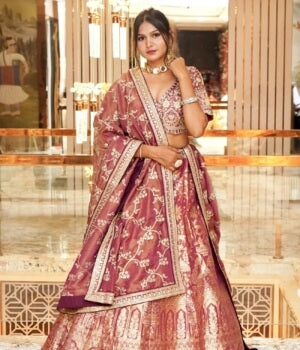
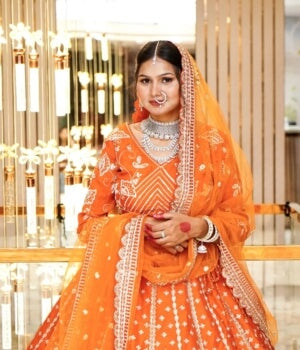

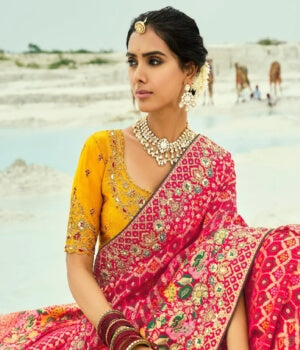
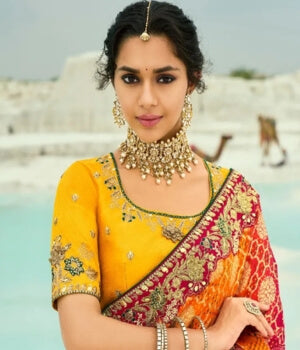
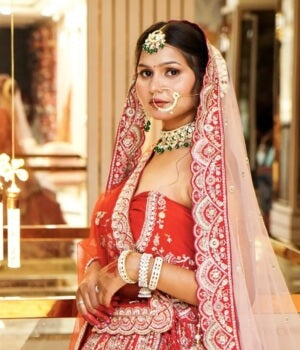
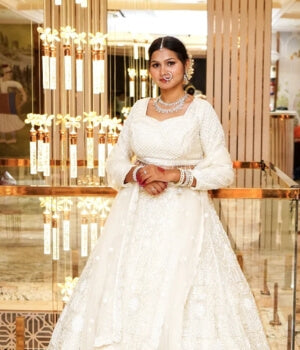
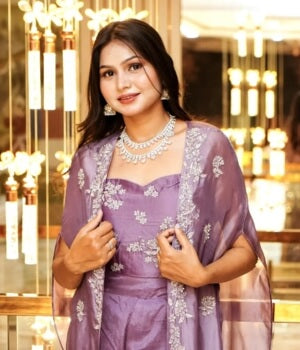
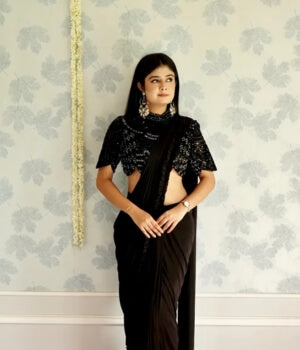
Pure Banarasi Silk vs Katan Silk Saree: What’s the Difference? Complete 2026 Guide
Choosing a silk saree can sometimes feel confusing, especially when terms such as Pure Banarasi Silk, Katan Silk, Banarasi Silk, and Katan Banarasi Saree are used together. If you are planning to purchase a traditional saree for a wedding, festival, reception, family celebration, or special occasion, understanding these terms can help you make a more informed decision. The difference between pure Banarasi silk vs Katan silk saree is not simply about which one is better. It is important to understand the relationship between the silk material, weaving technique, design, zari work, texture, and the way the saree is constructed.
Banaras has a long-established reputation for patterned silk weaving. The Government of India's India Handloom Brand documentation describes Banaras brocade sarees as finely woven silk sarees decorated with intricate zari designs, with Katan—described there as two-fold twisted mulberry silk yarn—used in both the ground warp and weft of the documented Banaras brocade type. This means that Katan is not necessarily an alternative to Banarasi; in traditional Banarasi weaving, Katan silk can actually be the silk yarn used to construct the saree. Understanding this distinction is one of the most important parts of shopping for an authentic Banarasi silk saree.
For shoppers in Varanasi, this distinction becomes particularly useful because the city's textile heritage is closely associated with Banarasi weaving. Banaras Brocades and Sarees is also a registered Geographical Indication covering handicraft goods from Uttar Pradesh.
What Is a Pure Banarasi Silk Saree?
A Banarasi silk saree is a saree associated with the traditional weaving heritage of Banaras, also known as Varanasi. Banarasi sarees are known for their detailed motifs, rich borders, zari work, and distinctive woven appearance.
The term Banarasi primarily describes the saree's weaving tradition, style, and geographical heritage rather than functioning as a simple synonym for one particular type of silk fiber.
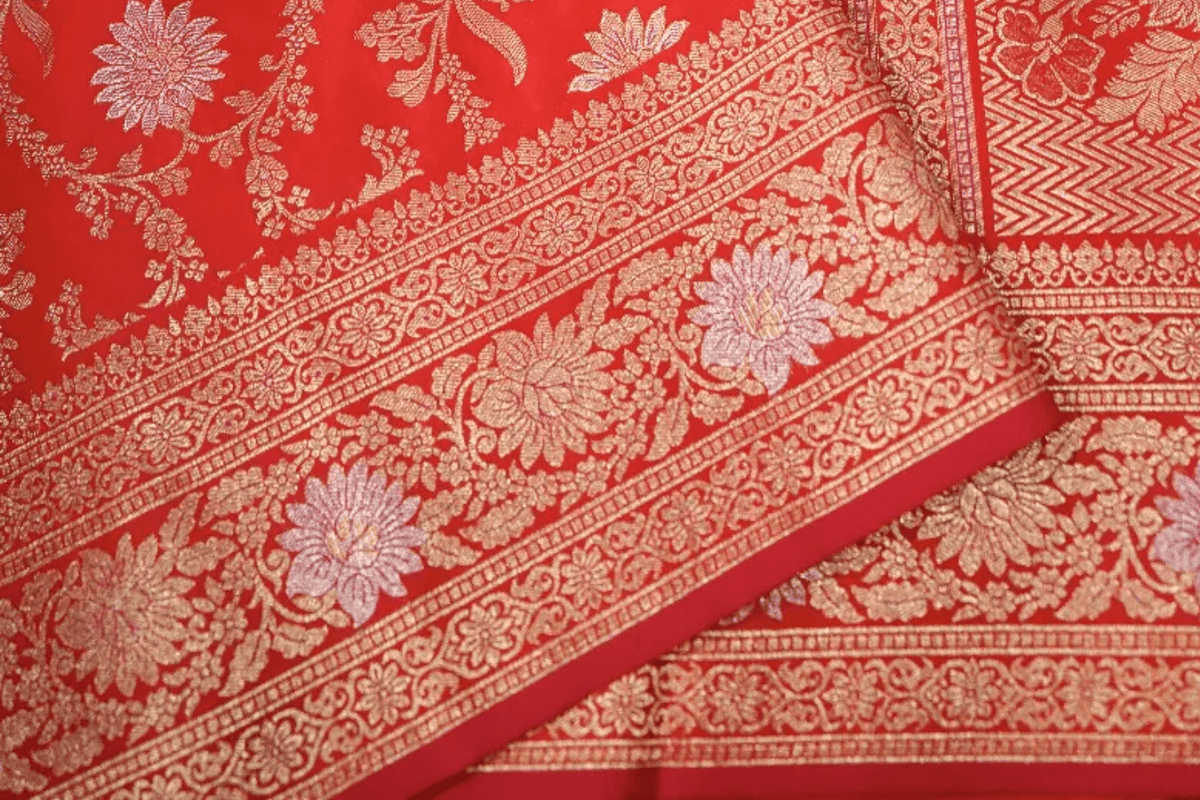
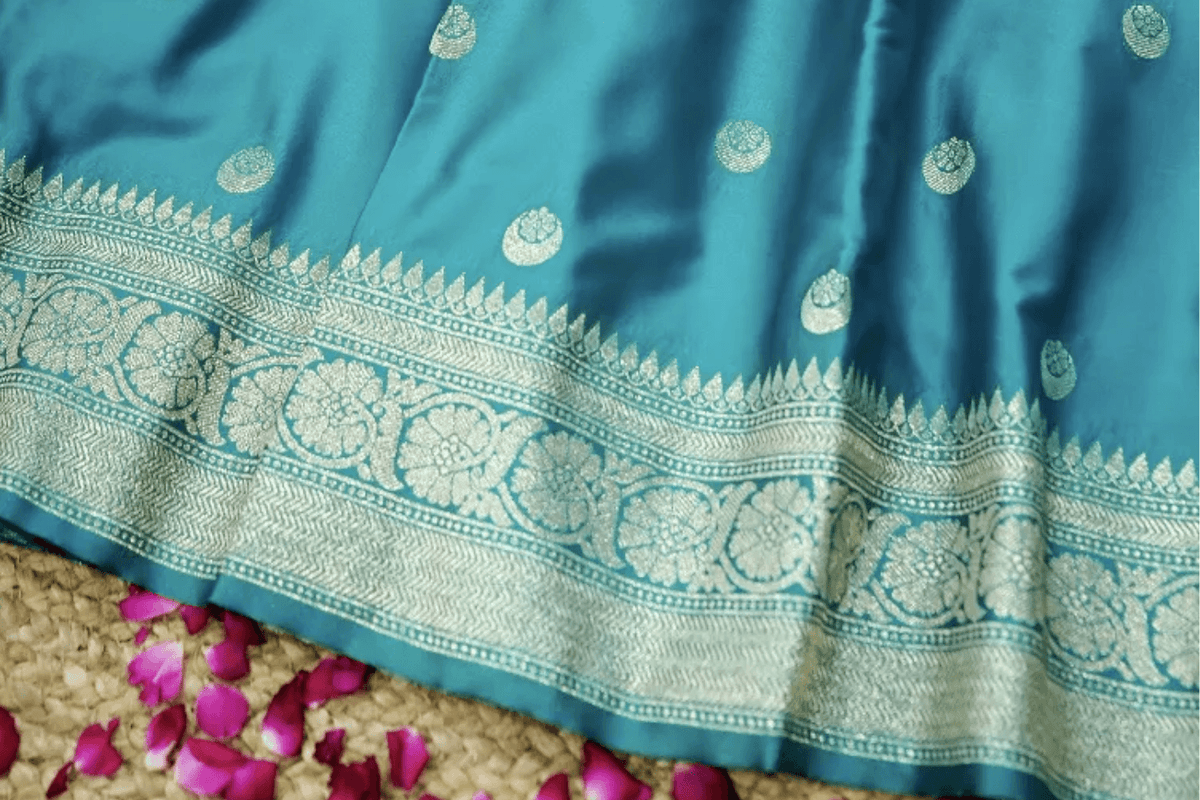
The official India Handloom Brand description of Banaras brocade explains that these sarees are made from finely woven silk and decorated with intricate designs using zari. It also identifies features such as floral and foliate motifs, compact weaving, metallic visual effects, and satin weave in the ground fabric.
This is why two Banarasi sarees can look quite different. One may have heavy gold zari and traditional motifs, while another may have delicate weaving and a lighter appearance.
When shopping for a pure Banarasi silk saree, it is therefore useful to ask about:
- The silk used
- The weaving technique
- The origin and craftsmanship
- The zari used
- The motif and design
- Whether the product has an authenticity or quality certification
- Care requirements
What Is Katan Silk?
Katan is a type of silk yarn traditionally associated with Banarasi weaving. The India Handloom Brand's official documentation describes Katan as two-fold twisted mulberry silk yarn used in both ground warp and weft for the documented Banaras brocade saree.
This is an important distinction because many shoppers search for “Katan silk vs Banarasi silk” as if the two terms always describe completely separate categories.
In reality, the relationship can be more nuanced.
A Katan silk saree may refer to a saree woven using Katan silk yarn, while a Banarasi saree refers to a saree belonging to the Banaras weaving tradition. Therefore, a Katan silk saree can also be a Banarasi saree when it is woven in the Banarasi tradition.
This is particularly relevant when shopping online because product names are sometimes simplified for customers. Instead of relying only on the product title, look at the detailed product description and ask about the actual silk and weaving method.
Pure Banarasi Silk vs Katan Silk: The Key Difference
The easiest way to understand the difference is to separate the identity of the saree from the material used in its construction.
| Feature | Banarasi Silk Saree | Katan Silk Saree |
|---|---|---|
| Main meaning | Refers to Banaras weaving tradition | Refers to Katan silk yarn/material |
| Associated region | Banaras/Varanasi | Traditionally used in Banarasi weaving |
| Silk | Can use different silk constructions depending on the saree | Katan refers to a particular silk yarn |
| Designs | Brocade, floral, foliate, zari and other woven motifs | Can feature traditional Banarasi designs when woven in that tradition |
| Appearance | Depends on weave, silk, zari and design | Often known for a smooth, rich silk appearance |
| Best use | Weddings, festivals, celebrations and special occasions | Weddings, festive occasions and traditional wear |
| Buying focus | Check weave, silk, zari and authenticity | Check yarn/fabric composition, weave and craftsmanship |
The key point is that these terms should not always be treated as two competing fabrics.
Is Katan Silk the Same as Banarasi Silk?
Not exactly.
Katan refers to the silk yarn/material, while Banarasi refers primarily to a weaving tradition and saree style associated with Banaras.
The official India Handloom Brand documentation provides a useful example: for Banaras brocade sarees, two-fold twisted mulberry silk yarn locally called Katan is used in both the ground warp and weft, along with gold and/or silver zari for designing.
Therefore, a customer asking for a Katan Banarasi saree may actually be looking for a Banarasi saree woven with Katan silk.
This distinction is useful when comparing products because it prevents shoppers from assuming that “Banarasi” and “Katan” are automatically opposite categories.
How Does Pure Silk Feel?
Silk is a natural protein fiber and is valued for properties including softness, sheen, drape, comfort, and color absorption. The Silk Mark Organisation of India notes that silk has a natural sheen, good drape, moisture absorption, and lightweight qualities.
However, touch alone should not be used to determine whether a saree is pure silk.
Silk Mark Organisation of India specifically states that identifying silk simply through look and feel is difficult.
This is an important buying tip because a fabric may feel smooth and luxurious without necessarily being pure silk.
When purchasing an expensive silk saree, buyers should therefore consider documentation, seller credibility, product specifications, and recognized authenticity labels where applicable.
What Makes Banarasi Silk Sarees Special?
Banarasi sarees have a distinctive place in Indian textile heritage because of their detailed weaving and decorative motifs.
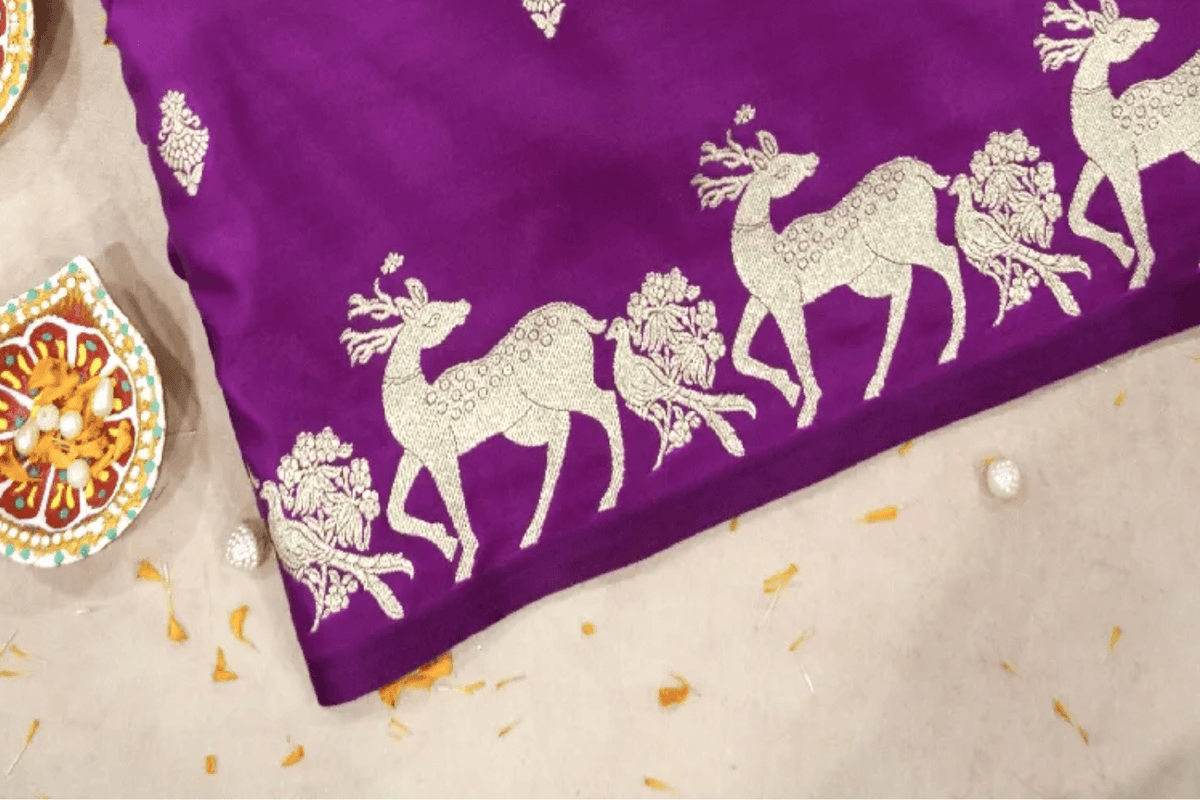
According to India Handloom Brand documentation, Banaras brocade sarees can feature intricate floral and foliate motifs, kalga and bel designs, metallic effects, compact weaving, jal patterns, and meenakari work.
The use of zari is another important part of many traditional Banarasi designs.
The combination of silk, woven motifs, borders, and zari can give the saree its characteristic festive appearance.
This makes Banarasi silk particularly suitable for:
- Bridal wardrobes
- Wedding ceremonies
- Reception outfits
- Diwali celebrations
- Traditional festivals
- Family functions
- Religious ceremonies
- Special occasions
- Heritage-inspired fashion
Katan Silk Saree: Why Is It Popular?
Katan silk is valued for its connection to traditional Banarasi weaving and its rich silk appearance.
Because Katan yarn is used in the construction of documented Banaras brocade sarees, it can provide the foundation for highly detailed woven designs.
For shoppers, the appeal often comes from the combination of:
Silk + traditional weaving + intricate motifs + zari + elegant drape
A Katan Banarasi saree can therefore be an excellent choice for someone looking for a traditional saree with a rich and sophisticated appearance.
Pure Banarasi Silk vs Katan Silk: Which Is Better for Weddings?
There is no single answer because the right saree depends on the type of wedding event, personal style, comfort preference, and desired appearance.
For a bridal ceremony, many women prefer richer silk sarees with detailed zari and traditional motifs.
For a wedding guest look, a lighter Banarasi saree may be more practical.
For an evening reception, a saree with rich zari, deep colors, and a luxurious finish can create a dramatic look.
For a daytime ceremony, softer shades and lighter designs may be more comfortable and visually appropriate.
Instead of choosing based only on the word “Katan” or “Banarasi,” consider:
- Fabric composition
- Weave
- Saree weight
- Zari work
- Color
- Occasion
- Personal comfort
- Care requirements
Banarasi Silk Saree Colors for 2026
In 2026, saree styling continues to balance traditional colors with contemporary palettes.
Classic Red
Red remains a timeless choice for bridal and festive wear. A red Banarasi silk saree with gold zari can create a traditional appearance.
Deep Maroon
Maroon provides a sophisticated alternative to bright red and works beautifully for evening celebrations.
Emerald Green
Emerald and bottle green can create a rich festive appearance, especially when paired with gold zari.
Royal Blue
Royal blue provides a bold contrast with gold motifs and can work particularly well for evening events.
Pink
From deep pink to softer rose shades, pink Banarasi sarees offer a feminine and versatile option.
Ivory and Gold
Ivory combined with gold can create an elegant, understated appearance for women who prefer neutral tones.
The best color, however, depends on the occasion, personal preference, skin tone, blouse styling, and jewellery.
How to Identify a Pure Silk Saree?
One of the most common questions shoppers ask is:
“How can I know whether my Banarasi saree is pure silk?”
The first step is to purchase from a trusted retailer and check the product information.
The Silk Mark Organisation of India states that its Silk Mark label is affixed only to 100% pure silk products by authorized users. The label includes security features such as a hologram and unique number.
This makes Silk Mark an important reference when purchasing pure silk products.
The organization also advises consumers that pure silk can be tested at Silk Mark offices and silk testing centers.
Important Tip
Do not depend only on visual appearance.
Silk Mark explicitly notes that silk is difficult to identify simply through look and feel.
For high-value purchases, ask the seller about:
- Fabric composition
- Silk percentage
- Product certification
- Silk Mark availability where applicable
- Original bill
- Return/exchange policy
- Care instructions
Can You Perform a Silk Burn Test?
Silk Mark Organisation of India describes a flame test for identifying silk fibers. Its guidance says silk burns slowly and produces a burnt-hair smell, while different man-made fibers behave differently.
However, this is not a recommended test to perform on an expensive saree at home, because it involves damaging the textile and using an open flame.
For valuable sarees, professional testing or recognized certification is a more appropriate approach.
Banarasi Silk vs Katan Silk: Which One Should You Buy?
Instead of asking which is universally better, ask:
What type of saree suits my occasion and preference?
Choose a rich Katan Banarasi style if you want:
- Traditional silk appearance
- Detailed woven motifs
- Rich festive styling
- A saree suitable for weddings
- A heritage-inspired wardrobe piece
Consider other Banarasi silk constructions if you want:
- A lighter appearance
- A different texture
- More contemporary styling
- Different levels of zari work
- A particular type of drape
The important thing is to understand the actual fabric and construction rather than selecting solely from the product name.
How to Style a Katan Banarasi Saree
Katan Banarasi sarees can be styled traditionally or in a contemporary way.
Traditional Gold Jewellery
Pair a rich Katan Banarasi saree with:
- Gold jhumkas
- Traditional necklace
- Bangles
- Maang tikka
- Traditional hairstyle
This combination works particularly well for weddings and festive ceremonies.
Statement Blouse
A modern blouse can transform a traditional saree.
Consider:
- High-neck blouse
- Elbow-length sleeves
- Embroidered blouse
- Contrast blouse
- Brocade blouse
- Deep-back blouse for evening functions
Minimal Jewellery
If your saree has heavy zari work, you may prefer simple earrings and a few bangles.
This keeps the overall appearance elegant without making the outfit visually overwhelming.
Banarasi Silk Saree for Different Occasions
For Weddings
Choose rich silk, traditional zari, and detailed motifs.
For Diwali
Jewel tones, gold zari, and festive silk sarees work beautifully.
For Navratri
Bright colors such as red, green, pink, yellow, and blue can create a vibrant festive appearance.
For Reception
A deep-colored Banarasi silk saree with statement jewellery can provide an elegant evening look.
For Family Functions
Choose a comfortable silk saree with moderate zari so you can enjoy the event without feeling overdressed.
For Religious Ceremonies
Traditional colors and classic draping styles can complement the occasion.
How to Take Care of Pure Silk Banarasi Sarees
A genuine silk saree deserves careful storage and maintenance.
Silk Mark notes that silk has excellent qualities but also requires careful handling; its guidance states that silk can lose strength when wet.
Follow these basic care practices:
- Store the saree in a clean, dry environment.
- Avoid prolonged exposure to direct sunlight.
- Do not fold the saree in exactly the same way every time.
- Refold it periodically to reduce permanent creases.
- Use breathable fabric for storage.
- Keep jewellery and sharp objects away from the saree.
- Follow the manufacturer's recommended cleaning method.
- Prefer professional dry cleaning when recommended.
- Avoid applying perfume directly to the silk.
With proper care, silk sarees can become long-lasting wardrobe pieces. Silk Mark notes that with appropriate care, a silk sari can last for generations.
How to Buy an Authentic Banarasi Silk Saree in Varanasi
If you are shopping for an authentic Banarasi saree in Varanasi, start by selecting a reputable saree retailer with experience in traditional textiles.
Ask questions such as:
Is this pure silk?
What type of silk is used?
Is this Katan silk?
How is the saree woven?
What type of zari is used?
Is the product Silk Mark certified, where applicable?
How should I care for the saree?
A knowledgeable retailer should be able to explain the characteristics of the saree rather than simply quoting a product name.
For customers shopping at Laxmi Saree Ghar, the brand's heritage dates back to 1970 in Varanasi, giving it decades of experience in traditional and contemporary ethnic wear. Its collection includes sarees suitable for bridal, festive, casual, and special-occasion dressing.
Why Varanasi Is Important to Banarasi Sarees
Varanasi, traditionally known as Banaras or Kashi, is closely associated with India's silk-weaving heritage.
The Government of India's India Handloom Brand describes Banaras as a major center of patterned silk weaving and documents several distinctive Banarasi textile traditions.
The Banaras Brocades and Sarees GI registration further recognizes the geographical association of these handicrafts with Uttar Pradesh.
For customers, this heritage adds significance to the saree beyond its visual appearance. A Banarasi saree represents a combination of textile craftsmanship, design traditions, regional heritage, and skilled weaving.
Frequently Asked Questions
Is Katan silk the same as Banarasi silk?
No. Katan refers to a silk yarn/material, while Banarasi refers to the weaving tradition and saree style associated with Banaras. Katan silk can be used in Banarasi sarees. Official India Handloom Brand documentation identifies Katan as a two-fold twisted mulberry silk yarn used in the ground warp and weft of the documented Banaras brocade saree.
Is Katan silk pure silk?
Katan traditionally refers to a silk yarn, and the India Handloom Brand documentation describes the Katan used for Banaras brocade as mulberry silk yarn. However, when purchasing a specific saree, always verify the actual fabric composition and product specifications rather than assuming purity from the product name alone.
What is a pure Banarasi silk saree?
A pure Banarasi silk saree is a Banarasi saree made with genuine silk rather than synthetic substitutes. For pure silk assurance, consumers can look for recognized certification such as Silk Mark where applicable. Silk Mark labels are issued to authorized users for 100% pure silk products.
Which is better for weddings: Katan or Banarasi silk?
Katan can be an excellent choice for weddings when you want a traditional silk Banarasi appearance. However, “Katan” and “Banarasi” are not always competing categories, because Katan silk can itself be used in Banarasi weaving.
How can I identify pure silk?
Visual inspection and touch alone are not reliable methods. Silk Mark Organisation of India recommends recognized authenticity measures and provides testing facilities for silk purity.
Are Banarasi silk sarees suitable for festive wear?
Yes. Their rich weaving, traditional motifs, silk texture, and zari work make Banarasi sarees particularly suitable for festivals, weddings, family celebrations, and other special occasions.
How long can a silk saree last?
With appropriate care and storage, a silk saree can last for many years. Silk Mark notes that a properly cared-for silk sari can last for generations.
Final Thoughts: Pure Banarasi Silk vs Katan Silk Saree
Understanding the difference between pure Banarasi silk vs Katan silk saree becomes much easier when you separate the terms “Banarasi” and “Katan.”
Banarasi primarily describes the textile tradition and style associated with Banaras, while Katan refers to a type of silk yarn used in traditional Banarasi weaving. Official India Handloom Brand documentation specifically identifies Katan as two-fold twisted mulberry silk yarn used in both the ground warp and weft of its documented Banaras brocade saree.
So, rather than treating Katan and Banarasi as two completely separate choices, look at the actual fabric composition, weaving technique, zari, motifs, finishing, authenticity, and intended use.
If you are purchasing a valuable silk saree, do not rely only on appearance or touch. Silk Mark Organisation of India states that identifying silk through look and feel is difficult and recommends recognized authenticity measures for pure silk.
For shoppers searching for pure Banarasi silk sarees in Varanasi, Laxmi Saree Ghar combines a heritage dating back to 1970 with a collection designed for traditional and contemporary occasions. Whether you are shopping for a wedding, festival, family celebration, or a timeless addition to your saree wardrobe, understanding the fabric and weaving tradition will help you select a saree that matches your expectations.
A beautiful Banarasi saree is not only about the way it looks—it is also about the silk, weaving, craftsmanship, heritage, and care behind it.