



Article: How to Identify an Authentic Banarasi Silk Saree: A Complete Buyer’s Guide

How to Identify an Authentic Banarasi Silk Saree: A Complete Buyer’s Guide
Banarasi silk sarees are admired for their intricate designs, traditional craftsmanship, rich colours, and connection with the textile heritage of Varanasi. From wedding ceremonies to festive celebrations, these sarees remain a popular choice for women who appreciate traditional Indian clothing. However, when shopping for an expensive saree, one important question often arises: How to identify an authentic Banarasi silk saree before buying it?
Understanding the fabric, weaving technique, zari work, product labels, and seller information can help you make a more informed purchase. Not every saree with a Banarasi-inspired design is made from pure silk, and not every silk saree is necessarily handwoven in the Banaras region. These differences matter when comparing quality and price.
If you are searching for a Pure Banarasi Silk Saree or an Authentic Banarasi Saree in Varanasi, this buyer’s guide explains the main features to examine, the questions to ask a seller, and the practical steps to take before making a purchase.
Whether you are shopping for a wedding, a family celebration, a festival, or a special gift, this guide will help you understand Banarasi silk saree quality and choose a design that suits your preferences and budget.
What Is an Authentic Banarasi Silk Saree?
An authentic Banarasi saree is associated with the traditional brocade and saree-making heritage of the Banaras region in Uttar Pradesh. These sarees are known for their detailed woven patterns, decorative borders, rich pallus, and traditional motifs.
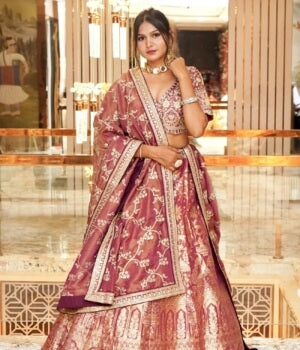
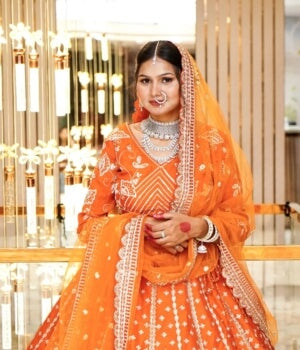
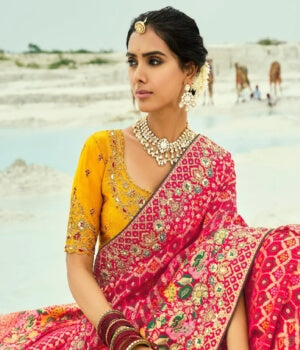
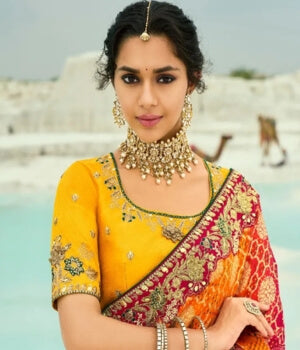
Common design elements include floral patterns, paisley-inspired shapes, ornamental vines, intricate jaal designs, and zari-style decoration. Some sarees also feature colourful supplementary details that create depth and contrast in the woven pattern.
The official geographical indication registration for Banaras Brocades and Sarees recognises the regional textile tradition. The Government of India's Geographical Indications records list the product as registered in 2009. This regional recognition is different from certification that confirms a saree's fibre composition.
It is important to understand that authenticity has more than one aspect. If you want a saree made from pure silk, you should check its fibre composition. If you want a handwoven saree, you should confirm the production method. If regional origin matters to you, ask about where the saree was produced and what documentation is available.
These details help you distinguish between a product's appearance, material, and manufacturing process.
Why Is It Important to Check Banarasi Silk Saree Quality?
A Banarasi saree can be an important investment, especially when purchased for a wedding or family occasion. Understanding the product before buying helps you compare options and avoid confusion about what you are paying for.
1. To Understand the Fabric
Sarees may be made from pure silk, silk blends, synthetic fibres, or other materials. Different fabrics can look similar in photographs or under certain lighting conditions.
If you specifically want a pure silk saree, confirm the stated fibre composition and look for relevant certification where available.
2. To Understand the Weaving Method
Banarasi-style sarees can be produced through different weaving processes, including handloom and powerloom methods. These methods can differ in production time, construction, price, and other characteristics.
If handwoven craftsmanship is important to you, ask the seller to confirm the weaving method rather than relying only on the pattern or product name.
3. To Compare Price Fairly
The price of a saree can depend on its fabric, weaving technique, pattern complexity, decorative materials, finishing, and craftsmanship.
Comparing products with clear and similar specifications makes it easier to understand differences in price. A high price alone does not prove that a saree is pure silk or handwoven.
4. To Make a Better Long-Term Purchase
A saree purchased for a wedding, anniversary, or special family event may be worn again in the future. Understanding its fabric and care requirements can help you maintain it properly.
Checking product details before purchasing can also help you choose a saree that matches your expectations and intended use.
How to Identify an Authentic Banarasi Silk Saree
There is no single visual feature that reliably proves every aspect of a saree's authenticity. The best approach is to combine product documentation, fibre information, construction details, and questions about the seller.
1. Check the Silk Mark Label
One of the most useful steps when buying a pure silk saree is to look for the Silk Mark label, where available.
The Silk Mark Organisation of India explains that its label is used on products represented as 100% natural silk by authorised users. Its labels include security features intended to help consumers identify genuine labels.
When shopping, consider these steps:
-
Look for a Silk Mark label on the product or its packaging.
-
Check the label's identifying details and security features.
-
Ask the seller whether they are an authorised Silk Mark user.
-
Request an original bill or purchase receipt.
-
If you have doubts, consult the official Silk Mark Organisation of India for guidance.
A Silk Mark label relates to the silk content of the product. It does not, by itself, prove that the saree was handwoven or that it originated in Varanasi.
Also, the absence of a label alone should not be treated as conclusive proof that a saree is fake. Ask for other reliable documentation and clarification about the material.
2. Ask Whether the Saree Is Pure Silk or a Blend
Before purchasing a saree advertised as Banarasi silk, ask the seller to explain its fibre composition.
A product may be made from 100% natural silk, a silk blend, or a different fibre. These materials can have different appearances, draping characteristics, care requirements, and prices.
If you want a Pure Banarasi Silk Saree, do not rely solely on the product title. Check the product description and ask for supporting information.
A useful question to ask is: “Can you confirm the exact fibre composition of this saree and provide any available documentation?”
Clear answers help you understand the product and compare it with other options.
3. Examine the Weaving and Motifs
Traditional Banarasi brocades are known for intricate designs and detailed woven decoration. Common motifs include floral and foliate patterns, paisley-inspired forms, ornamental vines, and net-like jaal designs.
When examining a saree, look at the body, border, and pallu. Notice how the patterns are arranged and how the decorative elements connect across the fabric.
The Government of Uttar Pradesh's Varanasi district website describes Banaras brocade sarees as featuring intricate zari decoration and traditional motifs, including kalga and bel designs.
However, a traditional-looking pattern does not prove that a saree is made from pure silk or produced using a particular weaving method. Design should be considered alongside material information and documentation.
4. Look at the Reverse Side of the Saree
Examining the reverse side can help you understand the saree's construction and finishing.
Look at how the threads and motifs appear on the back, particularly around the border and larger woven designs. Ask the seller to explain the weaving technique if you notice loose threads or differences in the finish.
Different weaving methods can create different reverse-side appearances. Loose or cut threads do not automatically mean that a saree is fake or poor quality.
Instead of relying on a single visual rule, consider the construction in context and request more information about the production method.
5. Understand the Zari Work
Zari-style decoration is a familiar feature of many traditional Banarasi sarees. It can create gold-toned or silver-toned patterns that make the saree look rich and festive.
However, decorative metallic-looking threads can vary in their materials and construction. Some products use genuine metallic zari, while others use tested or imitation alternatives.
Ask the seller to explain the zari composition if it is important to you. Check whether the product description clearly states the material instead of assuming that every gold-coloured thread contains real gold or silver.
Also remember that Silk Mark certification concerns silk content, not zari purity. The Silk Mark Organisation of India specifically clarifies this distinction in its official FAQ.
6. Examine the Border and Pallu
The border and pallu are important features of many Banarasi sarees. These areas often contain decorative motifs, intricate patterns, and contrasting colours.
Check whether the design looks consistent with the product photographs and description. Look at the finishing, the arrangement of the motifs, and the overall condition of the fabric.
For an expensive saree, ask the seller about any irregularities you notice. Handwoven textiles may contain characteristics that differ from machine-produced fabric, so not every variation should automatically be considered a defect.
The goal is to understand the construction and make sure the product matches what you expect to purchase.
7. Check the Product Description and Bill
Clear documentation is an important part of a confident purchase.
Before buying, check whether the product description identifies the fabric, weaving method, design, and other important specifications. Ask for clarification if the description uses broad phrases such as “premium silk” without explaining the actual material.
Keep the purchase receipt and any relevant product documentation, especially for a high-value saree.
If the saree is described as pure silk, handwoven, or made using a particular type of zari, ask the seller to confirm those claims in writing where possible.
8. Be Careful With Home-Based Silk Tests
Some traditional advice suggests testing silk by touching it, rubbing it, or burning a thread. These methods have limitations.
The Silk Mark Organisation of India notes that it is difficult to identify silk reliably by look and feel alone. Do not damage a saree by pulling out threads or attempting a burn test in a shop or at home. Such tests may damage the garment, can be unsafe, and are not a substitute for reliable documentation or professional testing.
For an expensive purchase, use recognised certification where available and ask about professional fibre testing if you need stronger confirmation.
What Is the Difference Between Pure Silk, Handwoven, and Authentic Banarasi?
These terms describe different aspects of a saree. Understanding them can help you avoid confusion while shopping.
Pure Silk
Pure silk refers to the fibre composition of the product. A Silk Mark label from an authorised user can provide assurance that the product is represented as 100% natural silk under the scheme.
However, pure silk does not automatically mean that the saree is handwoven or made in Varanasi.
Handwoven Saree
A handwoven saree is produced using a handloom process. If you specifically want handwoven craftsmanship, ask the seller for confirmation and relevant details.
The word “silk” describes a material, while “handwoven” describes a production method. One does not automatically establish the other.
Banarasi Origin
Banaras Brocades and Sarees have registered geographical indication status. Regional origin is therefore a separate consideration from the fibre composition.
If the saree's regional origin matters to you, ask the seller about where it was produced and what supporting documentation is available.
Why These Differences Matter
Imagine two sarees with similar colours and floral motifs. One may be made from pure silk, another from a silk blend, and both may look attractive in photographs. They may also differ in weaving method and place of manufacture.
A buyer who checks only the appearance may not understand these differences. Reviewing fibre information, production method, and regional details provides a clearer picture of what each product offers.
Common Myths About Authentic Banarasi Silk Sarees
Myth 1: Every Shiny Saree Is Pure Silk
Fact: Shine alone cannot confirm fibre composition. Different materials can have a similar appearance under certain lighting conditions.
Check the product details and relevant certification instead of relying only on visual shine.
Myth 2: Every Heavy Saree Is Handwoven
Fact: Weight can depend on the fabric, decorative threads, and pattern construction. It is not proof of handloom production.
Ask the seller to confirm the weaving method.
Myth 3: A Traditional Pattern Proves Authenticity
Fact: Floral motifs, paisley patterns, and zari-style borders can appear on products made using different materials and production methods.
Treat the design as one characteristic rather than definitive proof.
Myth 4: Silk Mark Certifies Every Aspect of a Saree
Fact: Silk Mark relates to the silk content of the product. It does not certify the purity of zari or independently establish the saree's regional origin or weaving method.
If these other details matter to you, ask for separate information.
Myth 5: The Most Expensive Saree Is Always the Best
Fact: Price alone cannot establish quality or authenticity. Compare the material, construction, design, documentation, and overall value.
The best saree is one that matches your needs and comes with clear, reliable product information.
Banarasi Saree Buying Tips for First-Time Shoppers
If you are buying a Banarasi saree for the first time, a simple checklist can make the process easier.
Decide on Your Budget
Set a budget before comparing products. This helps you narrow your options and compare sarees with similar specifications.
Remember to consider any additional costs for blouse stitching, alterations, accessories, or suitable garment care.
Choose the Right Fabric for Your Occasion
Consider whether you want pure silk, a silk blend, or another fabric. The right choice depends on your preferences, budget, comfort requirements, and intended use.
For a wedding or important occasion, ask about the saree's weight and care instructions before purchasing.
Ask Specific Questions
Instead of asking only whether the saree is original, ask questions that can be answered clearly:
-
What is the exact fibre composition?
-
Is the saree handwoven or powerloom-produced?
-
What materials are used in the zari work?
-
Is any relevant certification or product documentation available?
-
What are the care instructions?
-
What are the return or exchange conditions?
Specific questions make it easier to compare products and understand the seller's claims.
Compare Similar Products
Compare sarees with similar materials, weaving methods, design complexity, and decorative details. This provides a more useful basis for evaluating price.
Do not compare a pure silk handwoven saree with a synthetic blend


