Banarasi Saree vs Kanjeevaram Saree: Which One Should You Choose in 2026?
Indian sarees are more than just garments—they are a celebration of culture, tradition, and artistry. Among the many iconic saree styles found across the country, Banarasi Sarees and Kanjeevaram Sarees stand out as two of the most prestigious and sought-after choices. Both are known for their luxurious silk, intricate craftsmanship, and deep-rooted cultural significance, making them favorites for weddings, festivals, religious ceremonies, and grand celebrations.
However, when it comes to choosing between a Banarasi Saree and a Kanjeevaram Saree, many women find it difficult to decide. While both are masterpieces of Indian handloom weaving, they differ significantly in terms of origin, weaving techniques, fabric, motifs, texture, weight, styling, and overall appearance.
Whether you're a bride planning your wedding wardrobe, a family member attending a grand celebration, or simply a saree enthusiast looking to invest in a timeless piece, understanding the differences between these two iconic sarees will help you make an informed decision.
Established in 1970 in the historic city of Varanasi, Laxmi Saree Ghar has been preserving the rich legacy of Banarasi weaving for more than five decades. With an extensive collection of authentic Banarasi silk sarees and premium ethnic wear, the store continues to offer timeless designs that beautifully blend heritage with modern elegance.
In this detailed guide, we'll compare Banarasi Saree vs Kanjeevaram Saree, covering everything from their history and craftsmanship to styling tips, fabrics, occasions, maintenance, and buying advice.
The Rich Heritage of Indian Silk Sarees
India has a centuries-old tradition of handloom weaving, with different regions developing their own distinctive styles based on local culture, climate, and artistic influences.
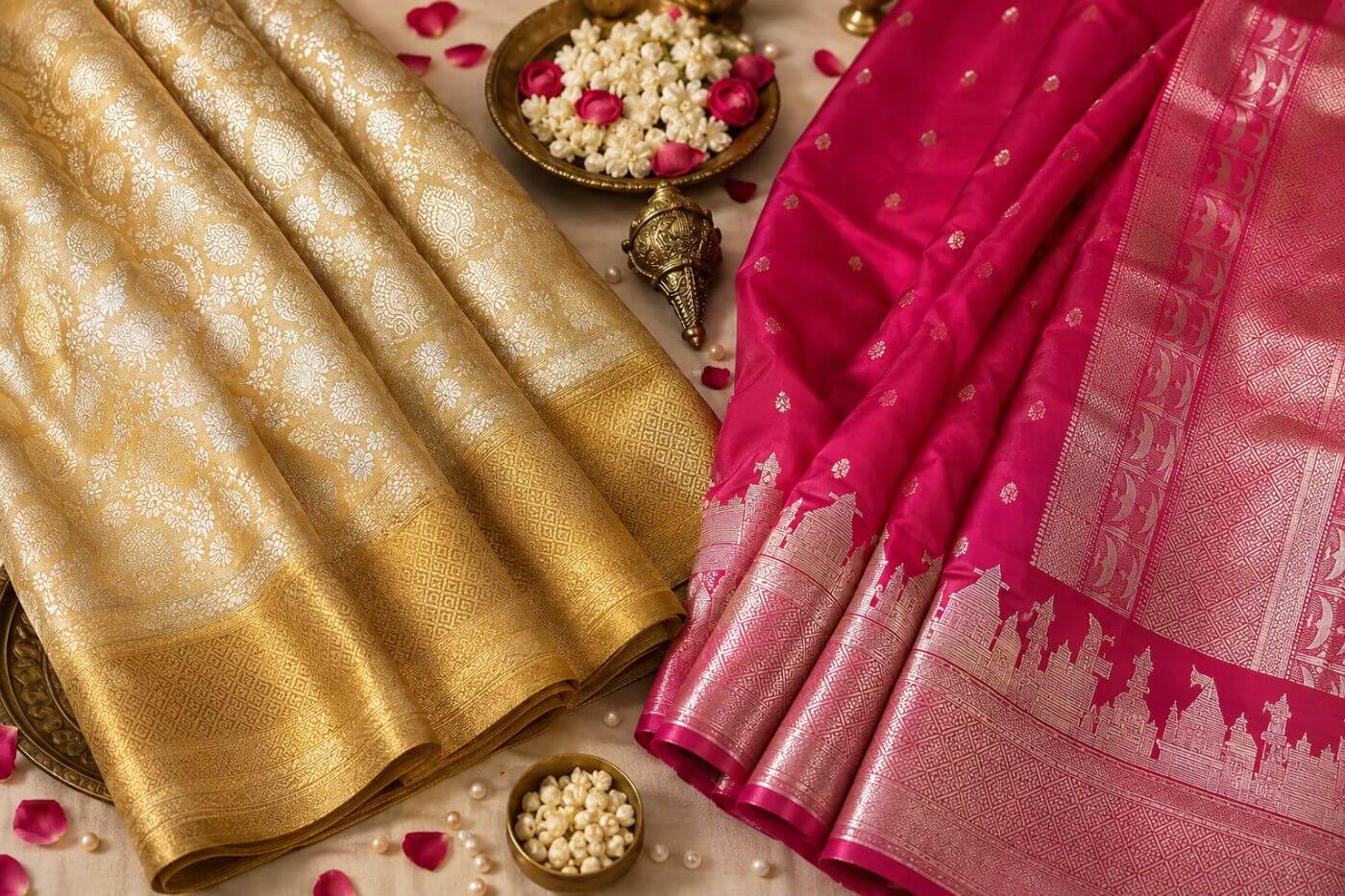
Among these traditions, Banarasi and Kanjeevaram sarees have achieved legendary status. Both are protected by Geographical Indication (GI) status, recognizing their unique craftsmanship and regional identity.
While Banarasi sarees represent the artistic heritage of North India, Kanjeevaram sarees embody the grandeur of South Indian weaving traditions. Both continue to be cherished not only in India but also by saree lovers around the world.
Understanding Banarasi Sarees
A Banarasi Saree originates from Varanasi (Banaras) in Uttar Pradesh, one of the oldest continuously inhabited cities in the world. For centuries, the skilled weavers of Varanasi have been creating luxurious silk sarees known for their intricate zari work and Mughal-inspired motifs.
Historically worn by royalty and nobility, Banarasi sarees have become an essential part of Indian bridal fashion. Today, they are equally popular for weddings, festivals, receptions, cultural events, and formal celebrations.
Key Features of Banarasi Sarees
-
Luxurious silk fabric
-
Intricate gold and silver zari weaving
-
Mughal-inspired floral motifs
-
Paisley (Kalga and Bel) patterns
-
Delicate brocade work
-
Elegant drape
-
Rich cultural heritage
-
Available in multiple fabric varieties
Popular Types of Banarasi Sarees
-
Katan Silk Banarasi
-
Organza Banarasi
-
Tissue Silk Banarasi
-
Georgette Banarasi
-
Brocade Banarasi
-
Jangla Banarasi
-
Tanchoi Banarasi
Understanding Kanjeevaram Sarees
Kanjeevaram Sarees originate from Kanchipuram, Tamil Nadu, a city often referred to as the "Silk City of India."
Known for their thick silk, contrasting borders, and temple-inspired motifs, Kanjeevaram sarees hold immense cultural significance, especially in South Indian weddings and religious ceremonies.
Their distinctive weaving style creates a bold, structured appearance that symbolizes prosperity and tradition.
Key Features of Kanjeevaram Sarees
-
Heavy mulberry silk
-
Contrasting borders
-
Rich temple-inspired motifs
-
Thick silk texture
-
Bright traditional colors
-
Durable construction
-
Grand visual appeal
Banarasi Saree vs Kanjeevaram Saree: A Detailed Comparison
1. Origin and Heritage
Banarasi Saree
-
Origin: Varanasi, Uttar Pradesh
-
Influenced by Mughal art and Persian designs
-
Represents North Indian textile heritage
-
Famous for delicate handwoven artistry
Kanjeevaram Saree
-
Origin: Kanchipuram, Tamil Nadu
-
Inspired by South Indian temple architecture
-
Represents Dravidian weaving traditions
-
Known for bold craftsmanship
Both carry centuries of history, but their artistic inspirations differ significantly.
2. Fabric and Texture
Banarasi Saree
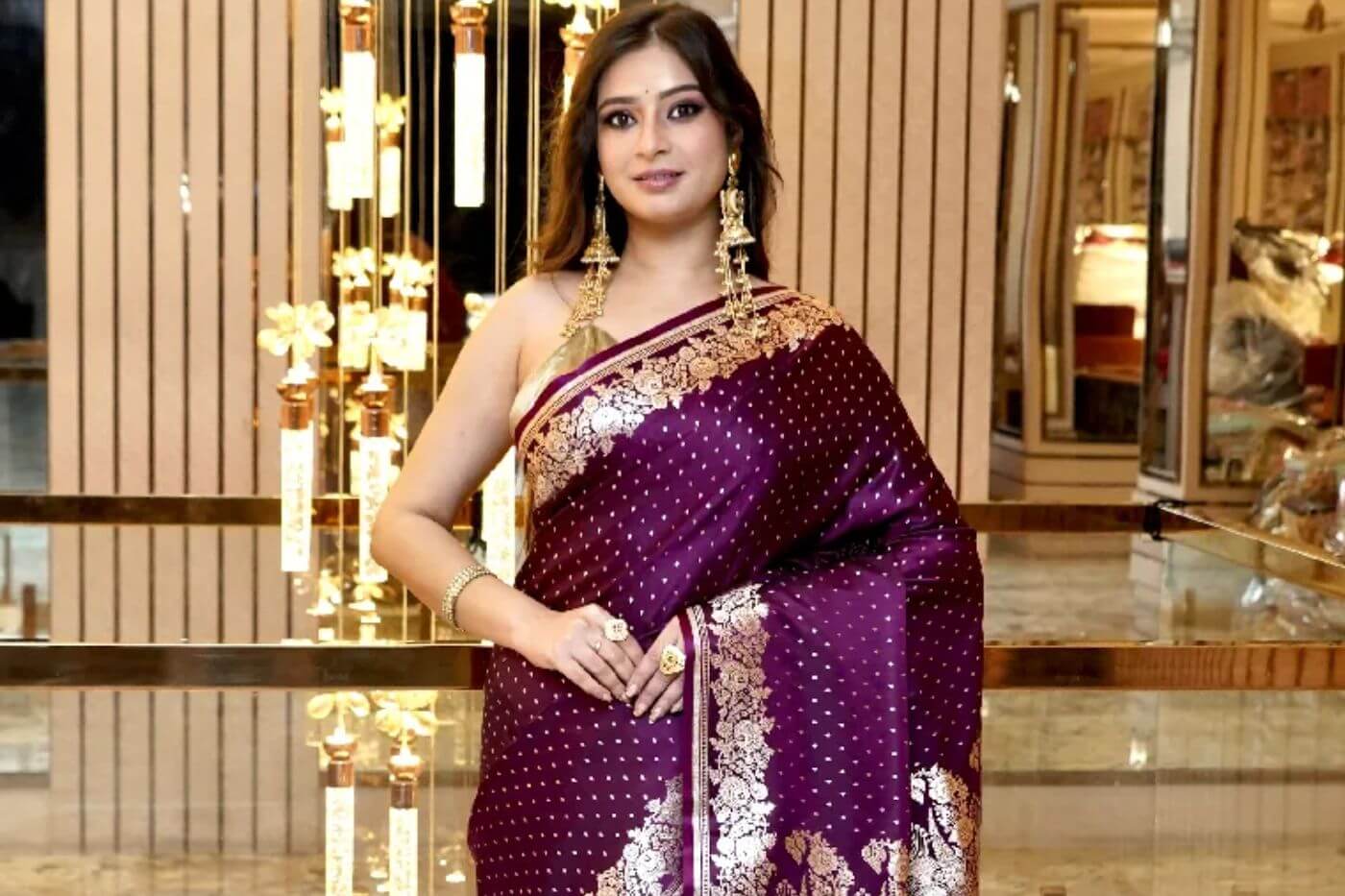
Banarasi sarees generally have a softer, smoother, and more fluid drape.
They feel luxurious without becoming overly heavy.
Common fabrics include:
-
Katan Silk
-
Organza
-
Tissue Silk
-
Georgette
-
Soft Silk
Kanjeevaram Saree
Kanjeevaram sarees use thicker mulberry silk, resulting in a heavier and more structured appearance.
The fabric feels substantial and is ideal for traditional ceremonies.
3. Weaving Techniques
Banarasi Sarees
Banarasi weaving focuses on:
-
Fine zari work
-
Intricate brocade
-
Floral vines
-
Delicate motifs
-
Detailed pallu designs
The emphasis is on elegance and intricate craftsmanship.
Kanjeevaram Sarees
Kanjeevaram weaving emphasizes:
-
Thick silk yarn
-
Strong borders
-
Contrasting body and pallu
-
Temple motifs
-
Bold geometric patterns
The result is a majestic and structured saree.
4. Motifs and Design Elements
Banarasi Sarees
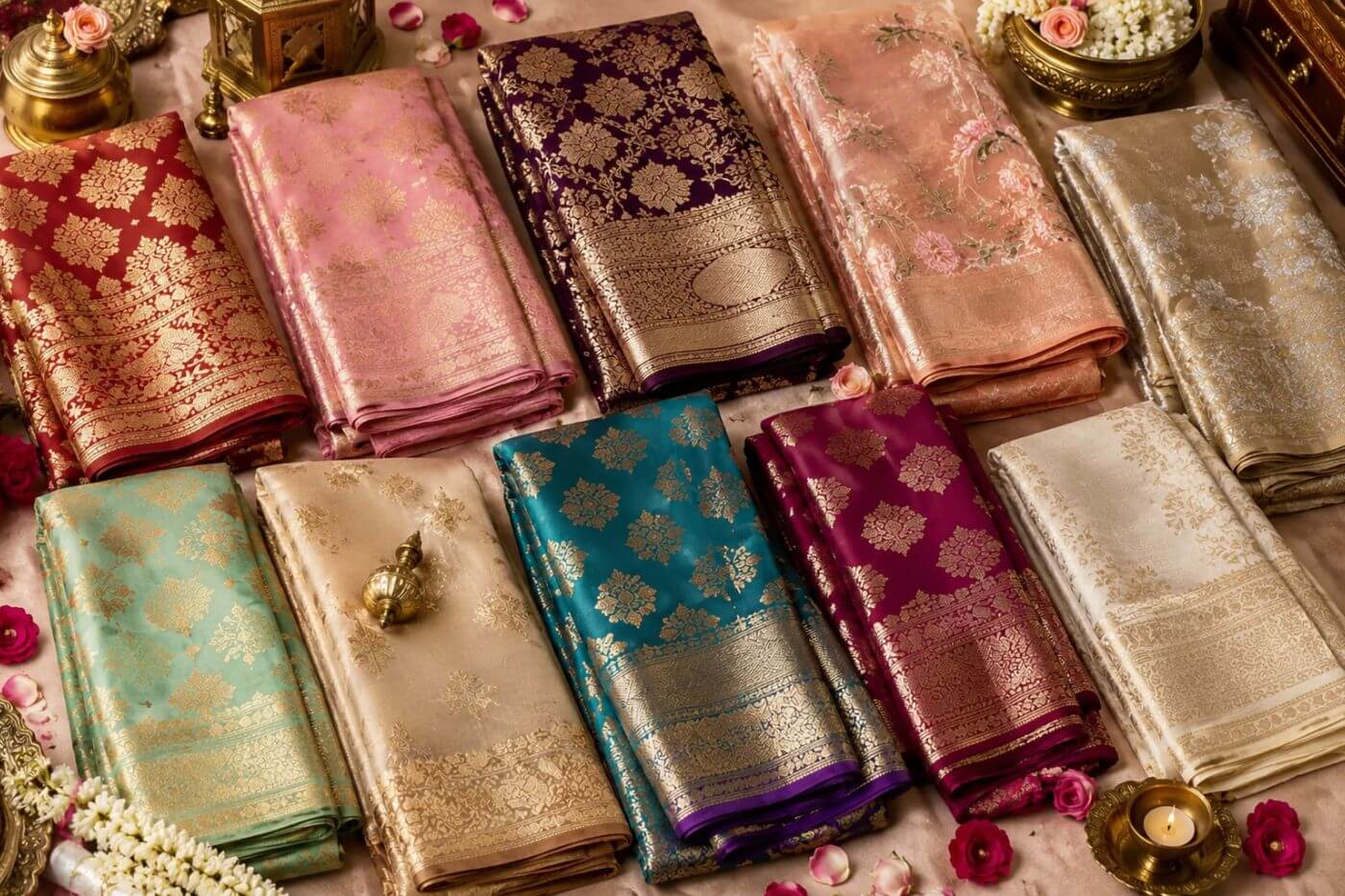
Popular motifs include:
-
Floral vines
-
Paisleys
-
Jaal designs
-
Mughal-inspired artwork
-
Butidar patterns
-
Kalga and Bel motifs
These designs create a graceful and refined appearance.
Kanjeevaram Sarees
Popular motifs include:
-
Temple borders
-
Peacocks
-
Elephants
-
Rudraksha patterns
-
Mango motifs
-
Checks and stripes
These motifs reflect South India's architectural and cultural heritage.
5. Weight and Comfort
Banarasi Sarees
-
Lightweight to medium weight
-
Soft drape
-
Comfortable for long hours
-
Easy to carry
-
Suitable for modern brides
Kanjeevaram Sarees
-
Heavy silk construction
-
Structured appearance
-
More formal feel
-
Slightly less flexible for extended wear
Women who prioritize comfort often prefer Banarasi sarees for all-day events.
6. Bridal Fashion Trends in 2026
Bridal fashion is increasingly embracing a balance between tradition and comfort.
Why Banarasi Sarees Are Trending
-
Lightweight luxury
-
Pastel shades
-
Contemporary styling
-
Modern blouse designs
-
Elegant draping
-
Comfortable wear
Why Kanjeevaram Sarees Continue to Shine
-
Traditional wedding significance
-
Rich silk texture
-
Bold colors
-
Grand appearance
-
Cultural importance
Both remain popular, but Banarasi sarees are increasingly chosen by brides seeking timeless elegance with modern versatility.
7. Color Trends
Trending Banarasi Colors in 2026
-
Blush Pink
-
Lavender
-
Emerald Green
-
Wine
-
Royal Blue
-
Ivory Gold
-
Rose Gold
-
Champagne Beige
-
Deep Maroon
Traditional Kanjeevaram Colors
-
Bright Red
-
Mustard Yellow
-
Emerald Green
-
Purple
-
Orange
-
Pink
-
Royal Blue
-
Gold
Banarasi collections are expanding into contemporary palettes, while Kanjeevaram sarees continue to celebrate bold, vibrant colors.
8. Styling Flexibility
Banarasi Sarees
Banarasi sarees can be styled with:
-
Contemporary blouses
-
Belted drapes
-
Minimal jewelry
-
Indo-western accessories
-
Modern hairstyles
This versatility makes them suitable for both traditional and fusion looks.
Kanjeevaram Sarees
Kanjeevaram sarees are generally styled traditionally with:
-
Temple jewelry
-
Jasmine flowers
-
Classic blouse designs
-
Traditional draping
9. Occasions
Banarasi Sarees
Perfect for:
-
Weddings
-
Engagements
-
Receptions
-
Festivals
-
Family celebrations
-
Corporate ethnic days
-
Anniversary parties
Kanjeevaram Sarees
Ideal for:
-
Temple weddings
-
Religious ceremonies
-
Traditional South Indian celebrations
-
Housewarming ceremonies
-
Family rituals
10. Long-Term Value
Both sarees are valuable investments.
However, Banarasi sarees offer greater versatility because they transition easily between traditional and contemporary occasions.
With proper care, both can become treasured heirlooms passed down through generations.
Which Saree Should You Choose?
Choose a Banarasi Saree If:
-
You prefer lightweight elegance.
-
You appreciate intricate zari craftsmanship.
-
You enjoy modern styling options.
-
You want a versatile saree for multiple occasions.
-
You love detailed floral and Mughal-inspired motifs.
-
You prefer softer draping.
Choose a Kanjeevaram Saree If:
-
You prefer structured silk.
-
You appreciate traditional South Indian aesthetics.
-
You like bold colors.
-
You attend religious ceremonies frequently.
-
You love temple-inspired designs.
-
You enjoy classic styling.
Why Banarasi Sarees Continue to Win Hearts
Banarasi sarees have successfully adapted to changing fashion trends without losing their traditional identity.
Their greatest strengths include:
-
Elegant drape
-
Rich silk
-
Comfortable wear
-
Modern color options
-
Intricate craftsmanship
-
Lightweight luxury
-
Timeless appeal
Whether styled traditionally or with contemporary accessories, Banarasi sarees continue to attract women across generations.
Caring for Your Silk Saree
Whether you own a Banarasi or Kanjeevaram saree, proper care ensures its beauty lasts for decades.
Care Tips
-
Dry clean only.
-
Store in a muslin cloth.
-
Refold every few months.
-
Avoid direct sunlight.
-
Keep away from moisture.
-
Do not spray perfume directly onto the fabric.
-
Iron on low heat using a protective cloth.
-
Store separately from synthetic fabrics.
Proper maintenance preserves both silk and zari work.
Buying Tips Before You Invest
When purchasing either saree, always consider:
-
Authenticity of the silk
-
Quality of zari weaving
-
Reputation of the seller
-
Occasion of use
-
Weight and comfort
-
Personal styling preferences
-
Long-term durability
Investing in authentic craftsmanship ensures lasting value.
Why Choose Laxmi Saree Ghar?
Established in 1970 in the culturally rich city of Varanasi, Laxmi Saree Ghar has earned the trust of generations by offering authentic Banarasi silk sarees crafted by skilled artisans.
With more than five decades of experience, the showroom combines traditional weaving techniques with modern designs to cater to today's fashion-conscious women.
Why Customers Choose Laxmi Saree Ghar
-
Authentic Banarasi silk sarees
-
Exclusive bridal collections
-
Traditional and contemporary designs
-
Premium silk fabrics
-
Skilled artisan craftsmanship
-
Personalized shopping experience
-
Wide range of colors, motifs, and styles
-
Trusted legacy since 1970
Every saree reflects the elegance, heritage, and artistry that have made Banarasi weaving famous worldwide.
Frequently Asked Questions (FAQs)
Which is better for weddings: Banarasi or Kanjeevaram?
Both are excellent choices. Banarasi sarees are ideal for brides seeking elegance, comfort, and versatile styling, while Kanjeevaram sarees are perfect for traditional South Indian weddings and grand ceremonial occasions.
Are Banarasi sarees lighter than Kanjeevaram sarees?
Yes. Banarasi sarees generally offer a softer and lighter drape compared to the heavier silk structure of Kanjeevaram sarees, making them comfortable for extended wear.
Which saree is trending in 2026?
Banarasi sarees—especially Pastel Banarasi, Katan Silk, Organza, and Tissue Silk collections—are among the biggest bridal and festive fashion trends in 2026.
Which saree is easier to style?
Banarasi sarees are considered more versatile because they pair well with both traditional and contemporary blouses, modern draping styles, and fusion accessories.
Can both sarees become heirlooms?
Absolutely. Both Banarasi and Kanjeevaram sarees are known for their exceptional craftsmanship and durability, making them treasured heirloom pieces when cared for properly.
Conclusion
When comparing Banarasi Saree vs Kanjeevaram Saree, there is no definitive winner because both represent the finest traditions of Indian textile artistry. Each saree carries a unique identity shaped by its region, weaving techniques, cultural influences, and timeless appeal.
If you are looking for a saree that combines intricate craftsmanship, luxurious draping, lightweight comfort, and styling versatility, a Banarasi Saree is an exceptional choice. Its elegant zari work, Mughal-inspired motifs, and ability to blend effortlessly with modern fashion make it ideal for weddings, receptions, festivals, and special occasions.
On the other hand, if you appreciate bold colors, structured silk, temple-inspired motifs, and traditional South Indian grandeur, a Kanjeevaram Saree offers unmatched richness and cultural significance, especially for religious ceremonies and classic bridal celebrations.
Ultimately, the perfect choice depends on your personal style, comfort preferences, cultural traditions, and the occasion you're dressing for. Whichever you choose, investing in an authentic handcrafted silk saree is a celebration of India's extraordinary weaving heritage.
At Laxmi Saree Ghar, this legacy has been preserved since 1970, offering beautifully crafted Banarasi silk sarees that reflect the timeless artistry of Varanasi. Whether you're building a bridal trousseau, shopping for a festive celebration, or adding a classic heirloom to your wardrobe, you'll find collections that combine authenticity, elegance, and exceptional craftsmanship for every special moment.